In the Field: Why Working Safety Professionals Choose RegLogic Formatting
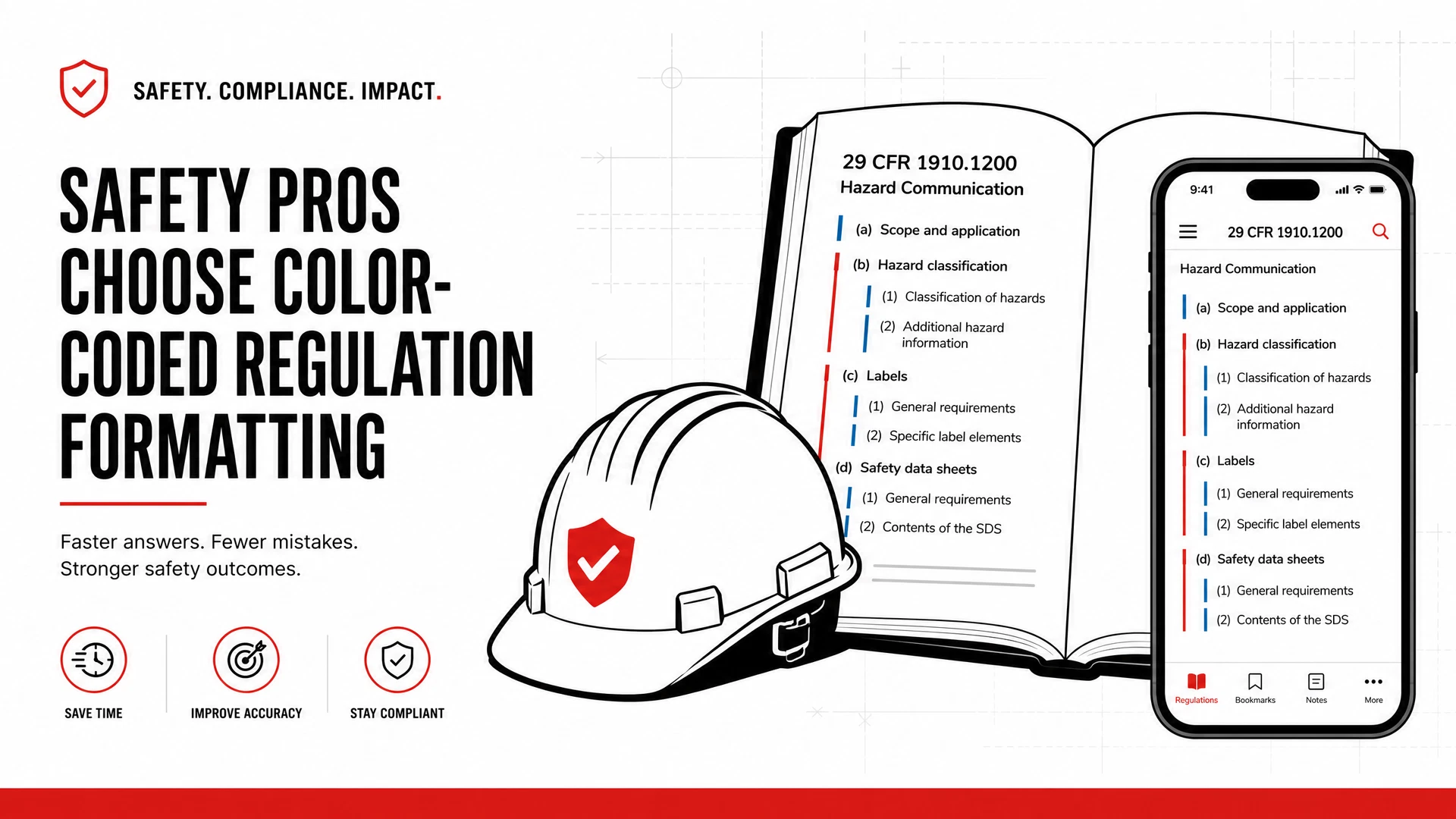
Ask a safety professional what slows them down most, and the answer is rarely the regulations themselves — it's the way they're presented. Raw CFR text is a wall of nested paragraphs, cross-references, and legal numbering that was designed for the Federal Register, not for a superintendent standing on a job site trying to answer a question before work resumes.
That's the problem RegLogic's formatting system was invented to solve, and it's why working safety professionals keep pointing to it as the difference-maker. In a public video review shared on Mancomm's LinkedIn page, safety professional Santiago Talamantez walked through why Mancomm is his preferred source for federal regulations — highlighting exactly three things: formatting, clarity, and real-world usability.
What the Formatting Actually Does
- Color-coded hierarchy — paragraph levels are visually distinguished, so you can see at a glance whether you're reading a requirement, an exception, or a note.
- Citation-first layout — section numbers like §1926.501(b)(1) stay visually anchored, so you can quote the exact provision in a toolbox talk or an abatement letter.
- Change notations — recent regulatory changes are flagged, so you're never training from last year's rule.
From Print Innovation to Digital Standard
RegLogic began as Mancomm's patented print formatting system — the same approach that made its 29 CFR 1910 and 1926 books a fixture in safety trailers across the country. The digital platform carries that formatting into search: type a keyword, land on the exact provision, and read it in the same color-coded structure the books made famous. The difference is that the digital version updates automatically as regulations change.
For professionals who reference standards daily — during audits, training sessions, and incident reviews — the formatting isn't cosmetic. It's the difference between finding an answer in seconds and losing twenty minutes to a PDF scroll.