The Year-End OSHA Gap Check Every Safety Team Should Run
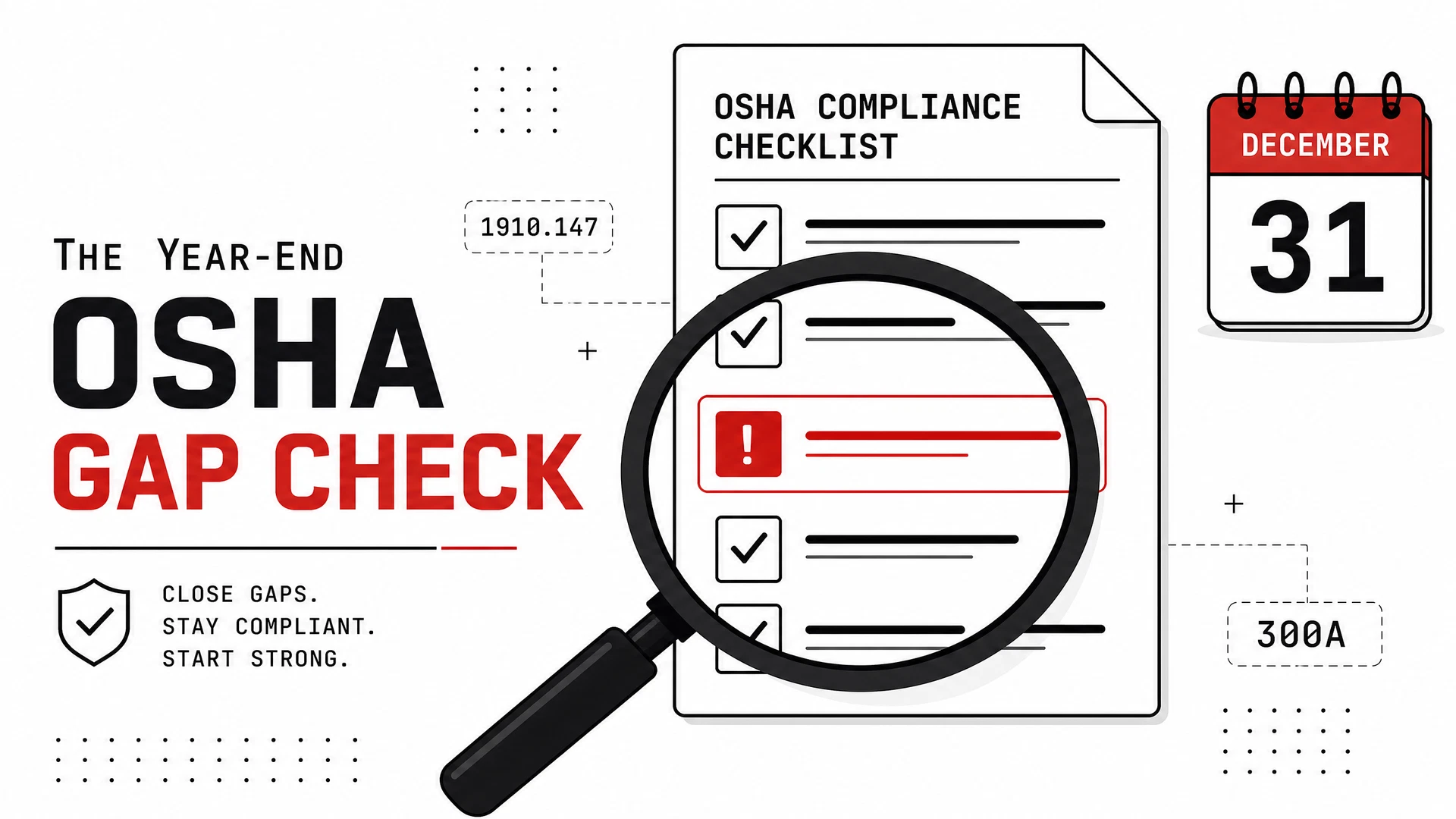
Every January, safety teams inherit the compliance gaps of the previous year — expired certifications, un-posted injury summaries, programs that quietly drifted out of alignment with amended standards. A structured year-end gap check catches those exposures while there's still time to close them.
1. Recordkeeping and the 300A Deadline
OSHA's Form 300A summary of work-related injuries must be posted from February 1 to April 30, and establishments covered by electronic reporting must submit data by March 2. December is the time to reconcile the 300 log: verify every recordable case is entered, classified correctly, and that days-away counts are accurate. Recordkeeping citations under 29 CFR 1904 are among the easiest for a compliance officer to find — and the easiest to prevent.
2. Audit Against the Top-Cited Standards
OSHA publishes its most-cited standards every year, and the list barely moves: fall protection, hazard communication, ladders, lockout/tagout, respiratory protection. Walk each one against your operations. If your HazCom program still references outdated SDS practices, or your LOTO procedures haven't been annually reviewed as §1910.147(c)(6) requires, those are findings you can close before an inspector does.
3. Training Records and Expirations
- Forklift operator evaluations — required at least every three years under §1910.178(l)(4)
- Annual retraining triggers — respiratory protection fit tests, LOTO reviews, HAZWOPER refreshers
- New-hire training documentation — signed, dated, and matched to current standard text
4. Program Reviews Against Current Text
Written programs age silently. Standards get amended, interpretation letters shift enforcement posture, and state plans adopt stricter requirements. The year-end check is simple: open each written program next to the current regulation text and verify alignment clause by clause. With a searchable, always-current platform like RegLogic, that review takes an afternoon instead of a week — and it's the single highest-leverage compliance task a team can run before January 1.
Frequently asked questions
When must the OSHA 300A summary be posted?
The Form 300A summary must be posted in a visible workplace location from February 1 through April 30 each year, covering the previous calendar year's injury and illness data.
What are OSHA's most-cited standards?
Fall protection (1926.501) has led the list for over a decade, followed consistently by hazard communication, ladders, lockout/tagout, respiratory protection, and powered industrial trucks.
How often must written safety programs be reviewed?
Requirements vary by standard — lockout/tagout requires annual procedure inspections under §1910.147(c)(6), while others trigger review when conditions or regulations change. An annual review of all written programs is best practice.